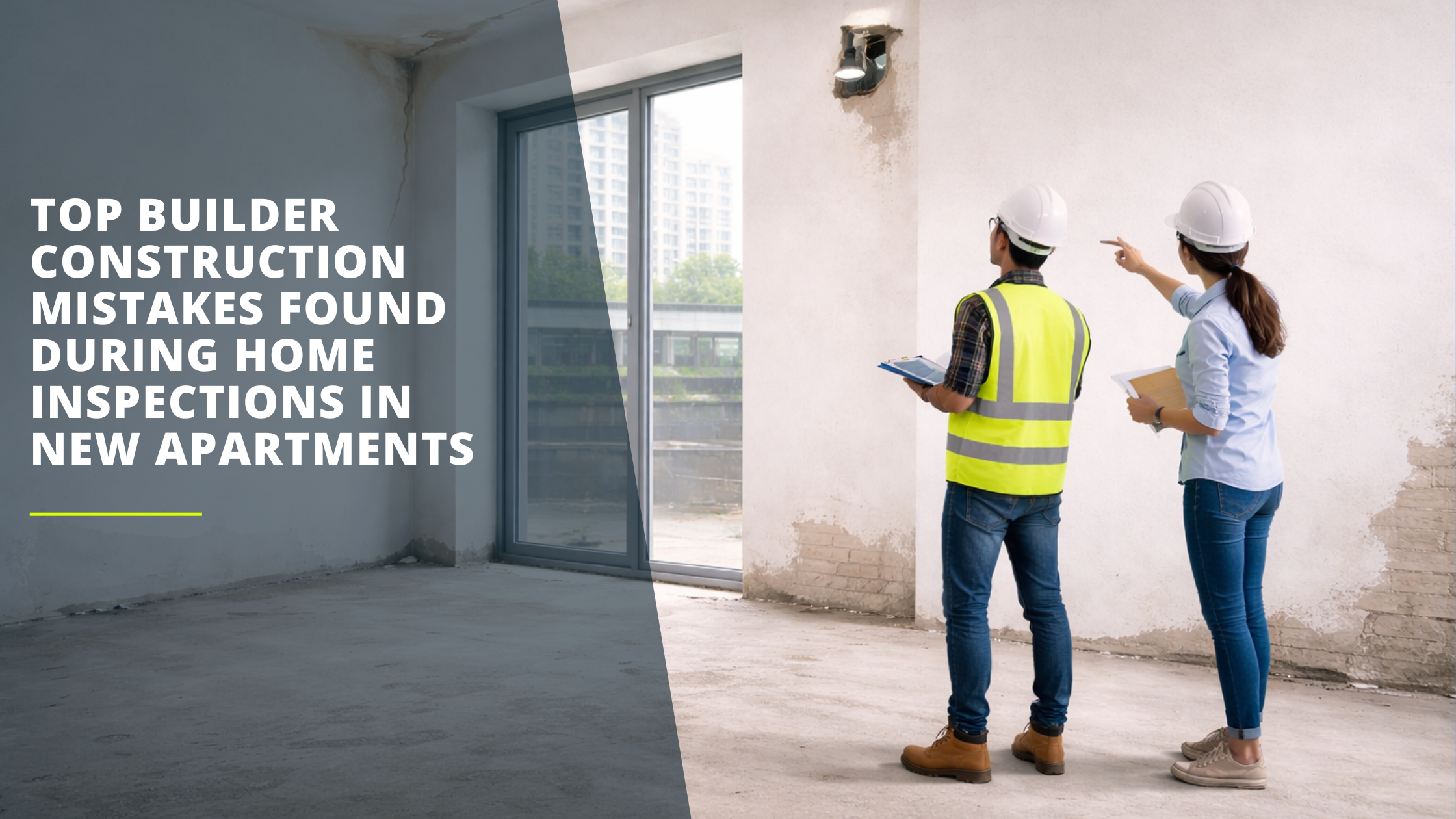
Below are some of the most frequent issues identified during apartment inspection and snagging assessments.
Table of Contents
Toggle1. Wall Cracks and Poor Plaster Finishing
Hairline cracks in walls are one of the most common defects seen in new apartments. While some cracks are cosmetic, others may indicate structural movement or poor plaster work.
These cracks usually appear near doors, windows, beams, and column joints. Poor curing during construction or improper plastering can lead to these issues.
A professional home inspection can help determine whether the cracks are harmless or require immediate correction.
2. Poor Waterproofing in Bathrooms and Balconies
Water leakage is a major concern in many newly constructed apartments. Improper waterproofing in bathrooms, balconies, and terraces often leads to damp walls and seepage problems.
Over time, this moisture can damage paint, weaken plaster, and create unhealthy indoor conditions.
During a pre-possession home inspection, inspectors check waterproofing quality, drainage slope, and possible leakage points.
3. Plumbing Defects and Water Pressure Issues
Plumbing problems are frequently discovered during home inspections. These may include leaking pipes, improper pipe alignment, or low water pressure in taps and showers.
Many buyers only notice these problems after moving in. Testing plumbing systems before possession helps ensure that water supply, drainage, and pipe installations are functioning properly.
Proper inspection can also identify hidden plumbing defects behind walls.
4. Uneven Flooring and Poor Tile Installation
Improper tile installation is another common construction mistake. Uneven flooring, hollow tiles, or poor grout finishing can reduce the durability of floors.
Hollow tiles often produce a hollow sound when tapped and may crack under pressure over time.
Professional inspectors check tile alignment, finishing quality, and installation strength to ensure flooring durability.
5. Electrical Installation Defects
Electrical safety is critical in any residential property. Home inspections often reveal issues such as loose switchboards, improperly connected wires, or missing earthing.
Poor electrical work can increase the risk of short circuits or electrical hazards.
During inspection, experts test switchboards, power outlets, wiring quality, and electrical load safety.
6. Door and Window Alignment Issues
Misaligned doors and windows are common in newly built apartments. Improper installation can cause difficulty in opening or closing doors smoothly.
These issues may also lead to gaps that allow dust, noise, or rainwater to enter the apartment.
Inspectors check frame alignment, locking systems, and installation quality to ensure proper functionality.
7. Inadequate Drainage Slope
Drainage slope plays a crucial role in bathrooms, balconies, and utility areas. If the slope is not designed properly, water may accumulate instead of draining out.
Standing water can lead to dampness, foul odor, and long-term waterproofing damage.
A home inspection ensures that floor slopes and drainage outlets are correctly installed.
8. Incomplete Finishing Work
In some cases, buyers receive apartments with incomplete finishing work. This may include unpainted surfaces, unfinished edges, loose fittings, or poorly sealed joints.
These issues may seem minor but can indicate rushed construction work.
A detailed snag list during home inspection ensures that all finishing work meets expected quality standards.
How a Home Inspection Protects Property Buyers
A professional home inspection provides a detailed evaluation of construction quality before possession. This helps buyers identify defects early and request necessary corrections from the builder.
For buyers investing in new properties, a pre-possession inspection checklist can prevent costly repairs after moving in.
It also provides peace of mind by confirming that the property meets safety and quality standards.
When Should You Conduct a Home Inspection
The best time to conduct a home inspection is before taking possession of the property and before making the final payment.
This stage allows buyers to report defects to the builder while the project is still under construction responsibility.
Many homebuyers today rely on professional inspection services to ensure transparency in property transactions.
Conclusion
Even newly constructed homes can contain construction defects. From plumbing issues to poor waterproofing, many problems remain hidden until a professional inspection is conducted.
A home inspection before possession helps identify builder construction mistakes and ensures that buyers receive a home that meets proper quality standards.
For anyone buying a new apartment, conducting a detailed home inspection is one of the most important steps in protecting your property investment.
FAQs
What is a home inspection for new apartments?
A home inspection is a professional assessment of a property’s construction quality, safety, and finishing work before the buyer takes possession.
Why should buyers inspect a new flat before possession?
Inspecting a new flat helps identify hidden defects such as plumbing issues, poor waterproofing, or electrical problems before final payment is made.
What are the most common construction defects in new homes?
Common issues include wall cracks, plumbing leaks, uneven flooring, electrical defects, poor waterproofing, and improper door or window installation.
When should a pre-possession home inspection be conducted?
A home inspection should ideally be conducted just before possession, when construction is complete but before the buyer accepts the property.
Can builders fix defects found during a home inspection?
Yes. If defects are identified before possession, buyers can request the builder to correct them before final handover.