Buying a new home is one of the most important milestones in life. Whether it’s your first home or an upgrade, the emotional excitement is unmatched. But along with that excitement comes responsibility—ensuring that the home you are taking possession of is built safely, correctly, and with the promised quality.
In India, particularly in 2025, homebuyers are increasingly turning to professional home inspection services to evaluate the construction quality of new flats before signing the possession letter. While the flat may look perfect on the surface, many defects remain hidden and only become noticeable after a few months of use — when repairs become your responsibility, not the builder’s.
A home inspection helps you catch these problems at the right time, when the builder is still accountable to fix them.
This guide explains the 8 most commonly found and critical construction defects every homebuyer should check before taking possession.
1. Structural Cracks in Walls and Ceilings
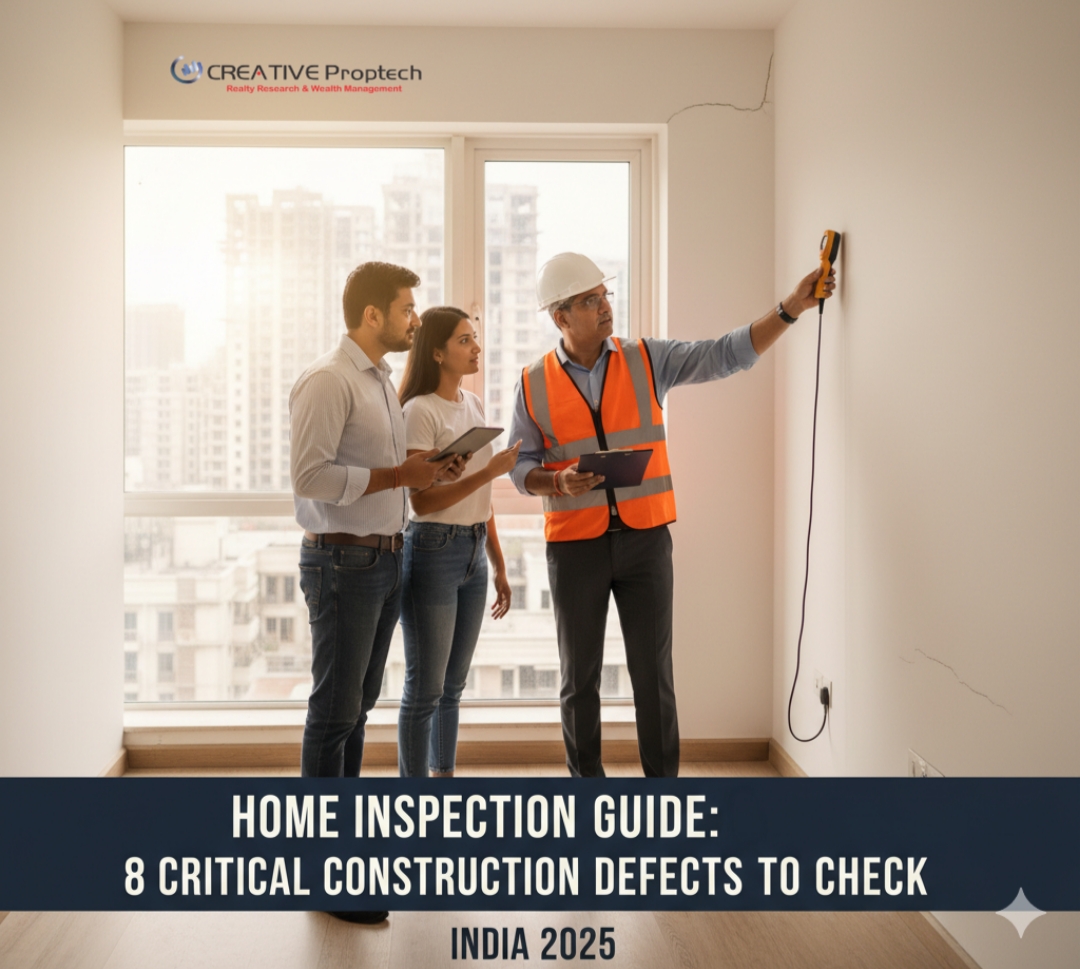
When you enter your new flat, everything is freshly painted and neat. However, look closely at corners, beam joints, and around window frames. If you notice even fine cracks, don’t ignore them.
Why Structural Cracks Occur
- Poor plaster work
- Rapid drying of cement
- Structural stress during construction
- Moisture seepage
Why It Matters
Small cracks may be cosmetic, but some cracks indicate deeper structural movement. If left unattended, they widen over time, leading to:
- Paint peeling
- Dampness
- Weakening of wall integrity
Professional home inspectors differentiate between harmless cosmetic cracks and cracks that may require structural repair. They often use moisture meters and crack-width gauges to evaluate severity.
2. Hollow, Uneven or Loose Floor Tiles
Flooring is a common area where shortcuts are taken during construction because it is time-consuming to install properly.
What to Look For
Tap tiles lightly with a coin. If you hear a hollow sound, the tile has not bonded properly.
Look for tiles that sit unevenly, causing edges to be felt while walking.
Check for cracks, especially near bathroom entrances.
Why It Matters
Hollow tiles may pop up or break later, leading to:
- Water seepage
- Safety hazard
- Expensive repair (since multiple tiles must be replaced)
A home inspection includes a tile hollowness test across all rooms, bathrooms, kitchen and balcony to ensure long-term durability.
3. Dampness and Water Seepage in Walls
Seepage is one of the most frequent complaints new homeowners face in India.
Where to Check
- Bathroom walls
- Below window sills
- Kitchen sink wall
- External-facing walls
Why It Happens
-
Poor waterproofing during construction
-
Leakage from adjoining flats
-
Cracks in external walls
Why It Matters
Dampness not only spoils aesthetics but promotes:
- Mold and fungal growth
- Musty odor
- Health issues like allergies
- Early deterioration of plaster and paint
A moisture meter helps inspectors identify hidden damp spots before they become visible.
4. Plumbing Quality and Water Pressure Balance
Plumbing issues are expensive and inconvenient to fix once interiors are done.
How to Check Water Pressure
- Turn on all taps — the flow should be consistent.
- Flush toilets and observe refilling time.
- Fill a bucket and time the flow rate.
Other Plumbing Checks
- No leakage under sinks
- Proper slope in bathroom flooring for drainage
- Taps and mixers installed tightly and aligned
Why It Matters
Poor plumbing can lead to:
- Wall seepage
- Water wastage
- Bathroom leakage to lower floors — one of the most costly repairs
A home inspector performs a full plumbing audit, including concealed pipe flow testing.
5. Electrical Safety, Load Capacity, and Earthing
Even if lights and fans work, the actual safety of your electrical setup must be checked.
Important Checks
- All switches must be properly anchored.
- The MCB board should have separate circuit breakers for high-load appliances.
- Earthing must be present in all plug points.
- Wires must be of correct gauge to prevent overheating.
Why It Matters
Electrical defects are dangerous and can cause:
- Power failures
- Short circuits
- Fire hazards
A home inspector uses testers to verify electrical load capacity and earthing continuity.
6. Door and Window Alignment
Open and close all doors and windows. They should slide or move smoothly without resistance.
Common Issues
- Doors that scrape the floor
- Windows with gaps allowing dust and noise
- Loose handles or locks
- Improper sealing around bathroom doors
Why It Matters
Misalignment indicates improper installation and can lead to long-term operational problems.
7. Bathroom Waterproofing and Drainage Slope
Bathrooms undergo daily water use — any defect here can cause serious long-term damage.
Checks to Perform
- Pour water on the floor and observe if it flows toward the drain.
- Look for damp patches on the ceiling of the floor below (if accessible).
- Ensure silicone sealant is used around the toilet base and shower areas.
Why It Matters
Bathroom leakage repairs often require breaking tiles, making it expensive and inconvenient.
8. Quality of Fixtures and Finishing Work
Builders sometimes replace promised branded materials with cheaper alternatives.
Checklist
- Verify that the fittings match the brand mentioned in the agreement.
- Check countertops, window frames, railing welds, and cabinet finishes.
- Look for scratches, dents, or uneven paint.
Why It Matters
This ensures you receive the value you paid for.
When Should You Get a Home Inspection Done?
- Before signing the possession letter
- Before making final payment
- Before interior work begins
This gives the builder clear responsibility to fix issues at their cost.
Final Thoughts
A new home should bring comfort, security, and pride — not unexpected repair bills and stress. A home inspection ensures your flat is safe, durable, and built with quality. Spending just a few hours today can save months of inconvenience and thousands of rupees in repair later.
A well-inspected home is a smart investment and a peaceful living experience.